With so many cyberattacks dominating the news, most conversations focus on individual threats like ransomware, phishing, and malware, which is great for awareness, though sometimes we need to step back and take a look at the bigger picture. The number of cyberattacks has grown so large that it almost feels abstract; for businesses, especially small and mid-sized organizations, it’s anything but. According to recent data, roughly 46% of all cyber breaches now impact businesses with fewer than 1,000 employees, and the vast majority of breaches still begin with phishing or credential theft.
These aren’t isolated incidents; they’re part of a continuous, automated system designed to find and exploit weaknesses wherever they exist. When it comes down to it, the automated attack is the answer to why there are so many cyberattacks, but that only scratches the surface.
Money Is Still the Primary Driver
 Once a niche field for enterprising criminals committing crimes with their keyboards, cybercrime has moved beyond a fringe activity into a structured, profitable industry. Ransomware groups, data brokers, and access sellers operate like businesses, complete with support teams, profit sharing, and repeat customers. Many attacks today are part of organized operations designed to generate revenue at scale; no attack exemplifies this better than ransomware.
Cybercriminals know that organizations rely on their data to operate, and when that data is locked, the pressure to pay is immediate. In recent years, we have seen ransomware attacks occurring constantly, often originating from phishing campaigns or compromised credentials. For businesses, this isn’t a theoretical threat that can be hand-waved; it’s operational downtime, regulatory exposure, and financial loss. Ransomware attacks are deliberate, effective, and uncompromising.
Your Business Data Has Value
Most businesses collect data, including customer records, employee information, financial data, vendor details, and operational systems that generate valuable information, which is exactly the data cybercriminals are after. The old assumption that “we’re too small to be targeted” is one of the biggest risks small businesses face. Cybercriminals don’t target anyone specifically; they use automated tools to scan for vulnerabilities, weak passwords, exposed services, and unpatched systems, and when they find one, they exploit it.
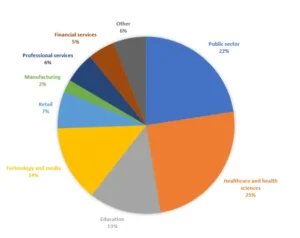
For this reason, industries that store large amounts of personal or financial data, like healthcare and professional services, experience higher incident rates. It’s not about the size of the business or its location; vulnerabilities, value, and accessibility are the key factors that determine who gets attacked.
Automation Has Changed the Game
 Most attacks today are carried out by bots that scan the internet 24/7 in search of vulnerabilities; this automation is the single biggest reason for the increase in cyberattacks. If your business has an exposed system, outdated software, or weak credentials, automated bots will find them. It feels like we are constantly under attack, because we are; cybercriminals don’t need to target you when their tools will find you.
The Expansion of the Attack Surface
Businesses today operate in a very different environment than they did even five years ago. Cloud services, remote work, mobile devices, and communication platforms have expanded how businesses operate and created vulnerabilities for attackers to exploit. Every login, device, and platform is a potential entry point. Email systems, file sharing platforms, and collaboration tools are now primary targets because they provide direct access to business operations.
From an operational standpoint, connected businesses tend to be more productive, but they also provide more opportunities for attackers.
Cybercriminals Feed Each Other
S tolen data is constantly being sold, shared, and reused; it doesn’t just sit in a database somewhere. When a breach occurs, that information is almost immediately packaged and sold on the dark web, where attackers use email addresses, passwords, and business details in future phishing campaigns, credential stuffing attacks, and targeted scams. This process creates a cycle where one breach leads to another.
For businesses, this means that even if the initial attack didn’t cause damage, the exposure from it will lead to future incidents. Not every data breach causes immediate damage; sometimes, the goal is to simply to acquire information and sell it to someone who can use it to make a more effective attack.
The Human Element Is Still the Weakest Link
Technology plays a vital role in cybersecurity, but rather than trying to hack through layers of security, most successful attacks involve people. Phishing, social engineering, and credential theft have proven to be the most effective attack methods because they exploit normal business behavior. Opening emails, clicking links, responding to requests, and logging into systems are all part of daily operations that cybercriminals try to exploit.
The philosophy is pretty simple: why go to the effort of breaking in when you can convince someone to let you in? This is why security awareness and training are critical components of any business cybersecurity strategy, not optional add-ons.
Why This Matters for Your Business
Cyberattacks have been increasing because of automation, but that automation comes from multiple conditions that favor attackers:
Cybercrime is profitable.
Automated attacks are inexpensive and cast a wide net.
Business environments are becoming more complex and vulnerable.
Data is extremely valuable and widely available.
People are susceptible to manipulation.
These factors apply equally to all industries, but for small and mid-sized businesses, that combination creates a persistent and growing risk.
How Businesses Fight Back
The solution to that risk isn’t a single tool or a quick fix; it’s a layered approach to cybersecurity. Strong passwords and multi-factor authentication reduce credential risk; regular updates and maintenance close known vulnerabilities; security awareness training reduces the likelihood of user-driven attacks; and managed cybersecurity services provide the oversight most businesses don’t have in-house. Businesses that are not actively managing these areas are relying on luck, not strategy, to keep them safe.
If you want to better understand your risk or put protections in place, give us a call at 301-456-6931 or email [email protected] for a free quote. Cyberattacks aren’t going anywhere; the difference is whether your business is prepared when one inevitably comes your way.